
We agreed not to die: Body, image and the dispute over the meanings of death in museums
Corpo, imagem e disputa de sentidos da morte nos museus
DOI:
https://doi.org/10.5935/2177-6644.20250040Abstract
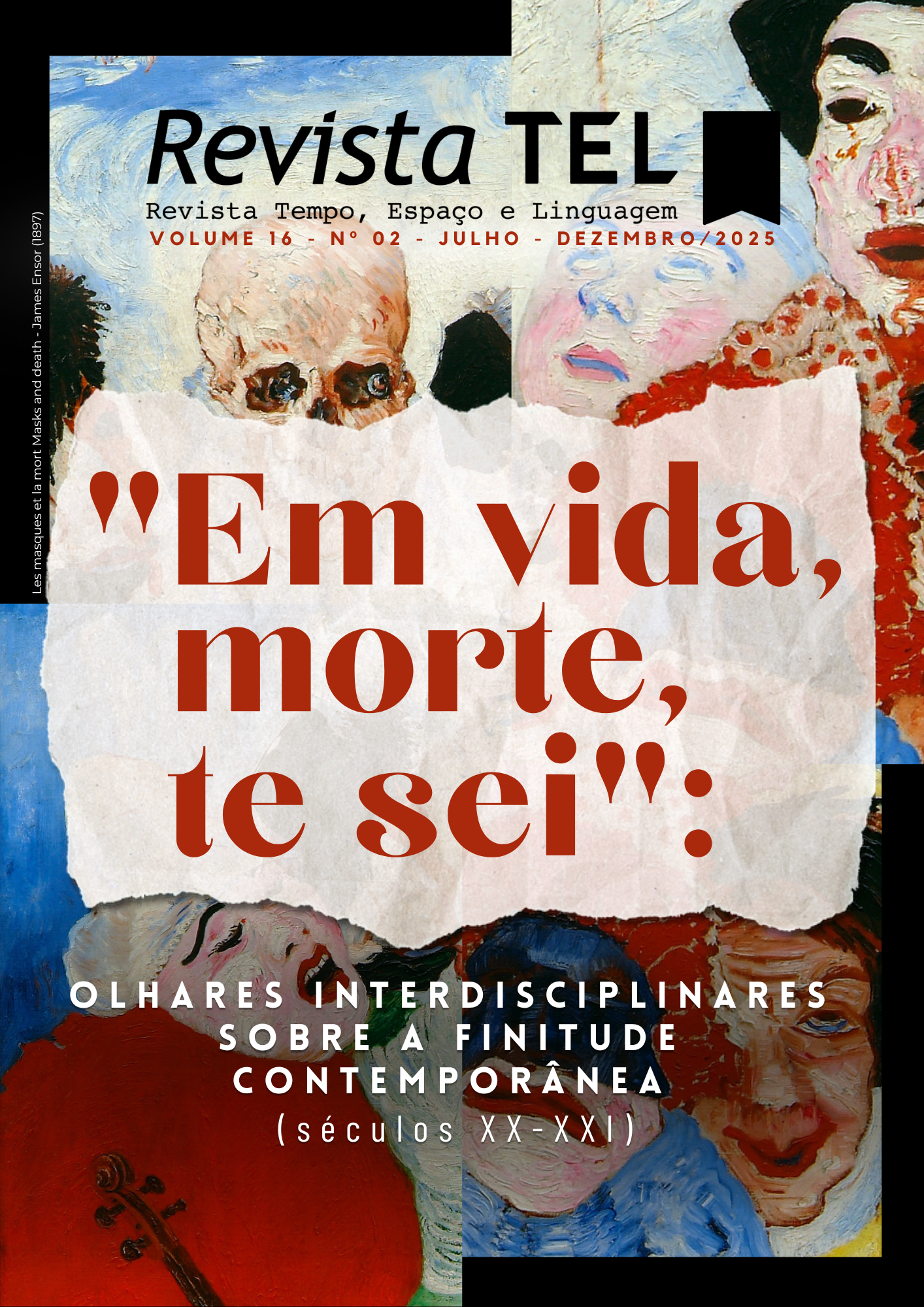
Death, in its ambiguity, finds in museology a field of tension between silence and exposure. In the realm of anatomy, the body is often reduced to an object, without reflection on its cultural meanings. In a scenario of widespread circulation and digital communication of medical sciences, it is proposed that these spaces become critical arenas, integrating science, ethics, and history to rethink their representations.
Downloads
Published
Issue
Section
License
Copyright (c) 2025 TEL Tempo, Espaço e Linguagem

This work is licensed under a Creative Commons Attribution 4.0 International License.
Authors are authorized to accept additional contracts separately, for the non-exclusive distribution of the version of the work published by this journal (ex.: to publish in institutional repository or as a chapter in a book), acknowledging authorship and the initial publication by this journal.


