O IDOSO NA UNIVERSIDADE: INCLUSÃO, EDUCAÇÃO E EXTENSÃO UNIVERSITÁRIA
DOI:
https://doi.org/10.5212/OlharProfr.v.19i2.0001Abstract
O envelhecimento da população mundial se apresenta como um fenômeno real, comprovado pelo censo que registra atualmente uma população de 25 milhões de idosos na sociedade brasileira. Ressalta-se que a educação se configura como uma importante ferramenta para a conscientização dos sujeitos e possibilita maior inclusão e participação social. O idoso sofre um processo de exclusão social, que aos poucos tenta ser superado pela implantação de políticas públicas que garantam direitos básicos a esta faixa etária, em especial aqui enfatizado o direito à educação, conforme prescrito no Estatuto do Idoso. Para a garantia deste direito, a sociedade deve se basear em uma concepção de inclusão não apenas como um movimento educacional, mas como um processo social e político. A educação inclusiva não é aquela que apenas aceita as diferenças, mas faz da diferença uma maneira distinta de expressão e de operacionalização do mundo. A universidade, no desempenho de suas funções (ensino, pesquisa e extensão), em especial, a extensão, oferece projetos para a educação do idoso, podendo-se citar a Universidade Aberta para a Terceira Idade. Este artigo objetiva refletir sobre a função extensionista da universidade e as Universidades Abertas para a Terceira Idade como ação para a inclusão e o empoderamento do idoso. O estudo também estabelece um perfil dos idosos que frequentam diferentes UATI brasileiras. Foi realizada uma pesquisa bibliográfica e de campo, com a aplicação de questionários para idosos de 12 UATI de diferentes regiões geográficas. Pode-se identificar a heterogeneidade dos alunos das UATI investigadas.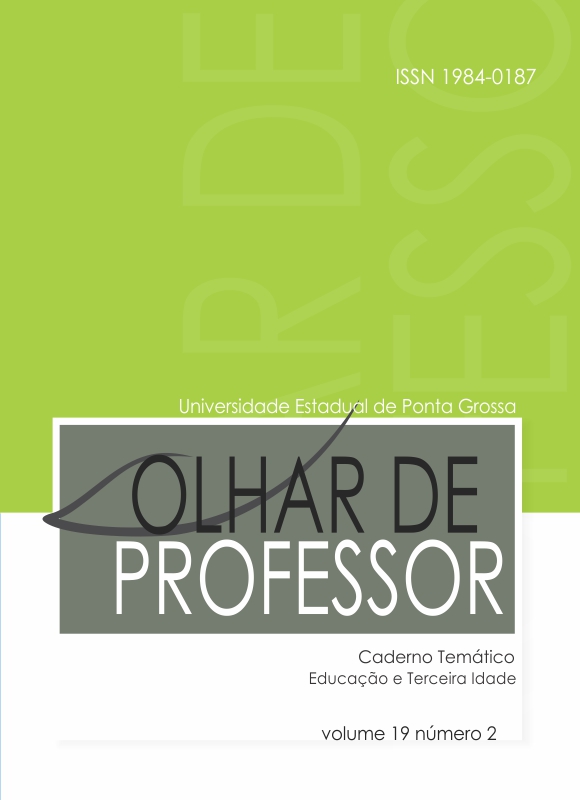
Downloads
Published
Issue
Section
License
Authors who publish in this journal agree with the following terms:
a) Authors keep the copyrights and concede the right of its first publication to the magazine. The work piece must be simultaneously licensed on the Creative Commons Attribution License which allows the paper sharing, and preserves both the author identity and the right of first publication to this magazine.
b) Authors are authorized to assume additional contracts separately, to not-exclusively distribution of the paper version published in this magazine (e.g.: publish in institutional repository or as a book chapter), with the author identity recognition and its first publication in this magazine.
c) Authors are permitted and stimulated to publish and distribute their papers online (e.g.: in institutional repository or on their personal webpage), considering it can generate productive alterations, as well as increase the impact and the quotations of the published paper.
d) This journal provides public access to all its content, as this allows a greater visibility and reach of published articles and reviews. For more information on this approach, visit the Public Knowledge Project, a project that developed this system to improve the academic and public quality of the research, distributing OJS as well as other software to support the publication system of public access to academic sources.
e) The names and e-mail addresses on this site will be used exclusively for the purposes of the journal and are not available for other purposes.

This work is licensed under a Creative Commons Attribution 4.0 International License.